
Why “More Loads” Isn’t the Goal Anymore: Profitable Lanes Are
For years, the advice to carriers was simple: move more freight.
More loads meant more revenue. More miles meant more money. And if rates dipped, the solution was usually to haul more to make up the difference.
That mindset doesn’t work anymore.
In today’s freight market, chasing volume without strategy is one of the fastest ways for owner-operators and small fleets to burn cash, rack up fatigue, and wonder why the numbers still don’t add up at the end of the month.
The carriers staying afloat, and in some cases quietly improving their margins, aren’t the ones hauling the most loads. They’re the ones running profitable lanes, even if that means hauling fewer of them.
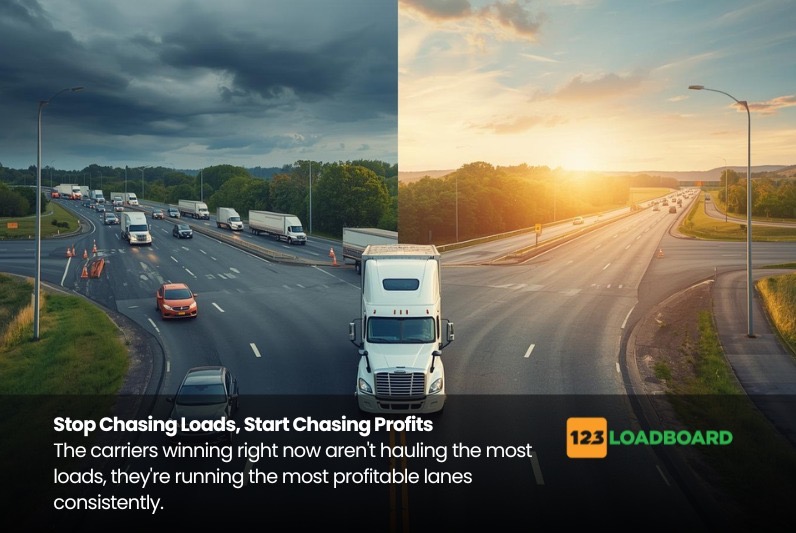

The Old Playbook: More Loads = More Money
When markets were tighter and demand was strong, volume covered a lot of mistakes.
You could take mediocre backhauls, accept deadhead miles as part of the game, run inconsistent lanes, and chase posted rates without much analysis, and still come out okay.
But today’s environment is different. Spot rates fluctuate fast. Fuel, insurance, and maintenance costs stay stubbornly high. Competition for decent loads is intense. Margins are thin, especially for small fleets.
In this market, volume hides inefficiency until it doesn’t. Running harder without running smarter just accelerates losses.
Why Load Volume Became a Trap
Here’s the uncomfortable truth many carriers are realizing late: a full trailer doesn’t guarantee a profitable trip.
When you focus only on load count, a few things tend to happen:
You ignore cost per mile.
A posted rate can look decent until you factor in deadhead pickup, time waiting, fuel prices in that region, toll-heavy routes, and maintenance wear. Two loads paying the same gross rate can produce very different outcomes once costs are applied.
You get pulled into bad lanes.
Some lanes consistently pay less, take longer to reload, and trap you in weak outbound markets. If you’re not tracking lane performance, you end up running familiar routes that feel productive but quietly drain margins.
You run more and rest less.
More loads often mean more stress, less downtime, higher risk of breakdowns, and poor decision-making late in the week. Fatigue is expensive. Burnout is worse.
The Shift That’s Happening Right Now
Across the industry, a subtle mindset shift is underway.
Instead of asking “How many loads can I move this week?” more carriers are asking, “Which lanes actually make sense for my operation?”
This is showing up in data and discussions across freight platforms. FreightWaves reports that successful carriers are focusing on establishing consistent, repeatable lanes rather than chasing high-paying, one-off loads. The shift includes shorter contract commitments, more selective spot market participation, increased focus on repeatable lanes, and fewer “take whatever pays today” decisions.
The goal isn’t to stay busy. It’s to work with intention.
What Makes a Lane Profitable (Not Just Busy)
A profitable lane isn’t defined by a single rate. It’s defined by consistency and predictability.
Here’s what carriers running strong lanes tend to evaluate:
Net, not gross.
They look at rate per mile after deadhead, fuel efficiency on that route, and average time from pickup to reload. A slightly lower-paying load can outperform a higher-paying one if it reloads fast and runs clean.
Reload reliability.
Strong lanes have consistent outbound freight, don’t strand you in weak markets, and reduce downtime between loads. According to market data, regional demand and reload activity are key indicators carriers should watch when evaluating lane performance. Time is money, especially when you’re waiting.
Operational fit.
Not every “good” lane is good for you. Truck type, hours of service, home-time preferences, and maintenance cycles all matter. Profitable carriers choose lanes that fit their operation, not someone else’s strategy.
Why This Matters Even More for Small Fleets
Large carriers can absorb inefficiencies. Small fleets can’t.
For owner-operators and one-to-ten truck fleets, one bad week hurts, one breakdown can derail cash flow, and one wrong lane choice can ripple for days.
That’s why lane discipline matters more than load volume. As FreightWaves emphasizes, companies and owner-operators alike must focus on cost discipline, risk mitigation, and operational agility in today’s margin environment. Fewer loads on better lanes often means more predictable income, lower stress, better equipment longevity, and stronger long-term survival.
It’s not flashy, but it works.
Data Helps, But Only If You Use It Right
There’s no shortage of data in freight today. Rates, heat maps, forecasts, and trend reports. It’s all available. The problem isn’t lack of information. It’s knowing what to pay attention to.
Smart carriers aren’t chasing every data point. They’re watching lane performance over time, rate stability versus volatility, regional demand shifts, and reload strength by market. Using the right tools to track these patterns helps carriers identify underperforming lanes and optimize their freight mix.
The goal isn’t to predict the future perfectly. It’s to make better decisions than last week.
Where 123Loadboard Fits Into This Strategy
At 123Loadboard, we believe a load board shouldn’t just be a place to grab the next load. Used correctly, it becomes a decision support tool.
Compare rates across lanes.
Our Rate Check tool shows you current market rates for any lane, so you can spot which routes actually make financial sense before you commit. Don’t chase volume. Chase value.
Identify patterns, not just postings.
Use our load search to filter for routes that align with your strategy. Search by equipment type, origin, and destination to see what’s consistently available versus one-off opportunities.
React faster when markets shift.
Set up real-time load alerts for your preferred lanes. When a matching load gets posted, you’re notified instantly. Speed matters when good lanes open up.
Build profitable multi-load trips.
Our Trip Builder helps you plan ahead and book multiple consecutive loads on high-performing routes. This is how you maximize trip profits and reduce deadhead miles.
Calculate accurate costs.
Use our PC*Miler integration to see actual mileage, routing, and toll costs before you book. Know your real cost per mile, not just your gross rate.
The Real Competitive Advantage Going Forward
As the industry looks ahead to 2026, one thing is becoming clear: the carriers who survive won’t necessarily be the biggest or the busiest. They’ll be the most disciplined.
They’ll say no more often, protect their lanes, watch margins instead of mileage, and choose consistency over chaos. In a volatile market, clarity beats speed.
Final Thought
More loads feel productive. Profitable lanes actually are.
If you’re running harder than ever but still wondering where the money went, it may not be your work ethic. It may be your lane strategy.
In today’s freight market, success isn’t about doing more. It’s about doing what makes sense, again and again.
Ready to find your profitable lanes?
Sign up for 123Loadboard and start using the tools that help you work smarter, not just harder. The carriers who win aren’t chasing loads. They’re building strategy.
Give us your opinion!