
Tightening Capacity Alert: How Broker Strategies Must Evolve Amid Carrier Exits
The market is sending brokers a very clear message right now, and it’s worth paying attention to. As of early March 2026, national tender rejection rates have climbed to between 13.4 and 14 percent, levels we haven’t seen consistently since 2022, which means carriers are turning down loads at a rate that should have every broker rethinking how they source capacity.
Layer that on top of flatbed’s extraordinary tightness, where load-to-truck ratios are hitting 70-plus in hot markets, and what you’re looking at is not a seasonal fluctuation but a structural shift in how this market operates. (Freight market analytics reports)
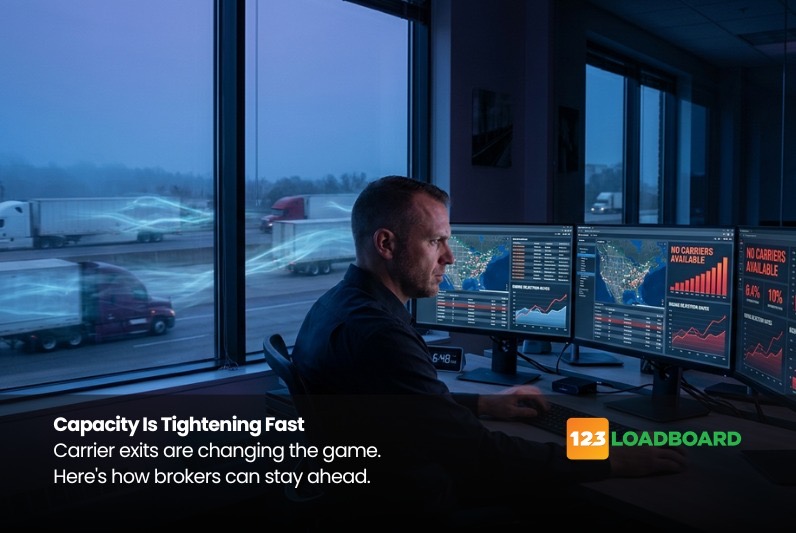

Years of Carrier Attrition Are Finally Catching Up
The root of all this goes back further than this week. A prolonged wave of carrier attrition has been quietly removing tens of thousands of operators from the market since the freight recession that ran from 2022 through 2025.
Industry and regulatory data show net losses of over 88,000 authorities during the peak years of that downturn, and smaller carriers, especially fleets running one to ten trucks, have continued to exit because thin margins, high operating costs, and mounting regulatory pressure simply made it unsustainable. (Keynnect Logsitics)
Recent enforcement actions around driver compliance and English proficiency rules are adding to the pressure, and the March 16, 2026 restriction on non-domiciled CDLs, which could affect up to 200,000 license holders, is accelerating the squeeze even further.
Analysts are describing this phase as “fragile,” and that’s the right word. Capacity is tightening structurally, creating lane-level shortages and higher spot rates even without a big demand surge to explain it.
What This Means for Brokers Right Now
For freight brokers who rely on small carriers and owner-operators for quick, reliable coverage, this environment hits differently than past tight markets. Fewer available trucks means longer search times, especially in flatbed and reefer where rejection rates are amplifying coverage gaps and making every uncovered load a potential relationship problem with shippers. Rising spot market costs are squeezing margins at the same time brokers are under pressure to vet carriers more carefully in a shrinking pool where fraud risks tend to rise.
The old playbook, where abundant options made it easy to find coverage fast, is fading, and brokers who cannot adapt risk losing loads and clients to competitors who have already built better networks.
The Brokers Who Will Win Are Already Moving
But here’s the flip side. This environment genuinely rewards brokers who have already invested in strong, visible connections with remaining small-fleet carriers. Speed is now a competitive advantage in a way it has not been in years because brokers with access to fresh, real-time carrier availability can fill loads before competitors even know the truck is out there.
The carriers who are still in this market after everything the last few years threw at them are generally the ones worth building real relationships with. Nurturing those connections provides a meaningful buffer in tight conditions and opens access to the premium, harder-to-cover lanes that generate the margins worth protecting.
How to Adapt Your Approach
The practical approach right now is to prioritize rapid carrier matching above almost everything else because with rejections up and capacity shrinking, the window to secure a truck before someone else does is genuinely short. At the same time, tracking national and regional rejection trends daily helps you anticipate where capacity will be scarcest before it becomes critical, so you can reposition your sourcing efforts proactively instead of reactively.
While you need to move fast, carrier vetting still matters. In a tighter pool, using tools that combine real-time visibility with quick reliability checks means you are not trading speed for risk. (Logistics Managers’ Index)
The Bottom Line
We built 123Loadboard to help brokers do exactly this. It helps them find carrier capacity fast, filter for reliability, and stay ahead of where the market is tightening before loads go uncovered. If your current workflow is feeling the strain of this capacity shift, this is a good time to make sure you are working with the most current load and carrier data available.
Watch the rejection rate numbers closely this week and keep an eye on how the March 16 CDL rule implementation plays out because further exits could push tightness even higher in the near term. Brokers who are building the right carrier relationships and moving with speed right now are the ones who will be best positioned as this market continues to evolve.
In a market where capacity is shrinking and speed is everything, having access to a deep, active pool of carriers isn’t a nice-to-have, it’s the whole game. 123Loadboard connects brokers with thousands of small carriers and owner-operators posting availability in real time, so you can find coverage fast, build the relationships that hold up in tight markets, and protect your book of business as conditions evolve.
If you’re not already using 123Loadboard to source capacity, there’s no better time to start. Join us today and stay ahead of where the market is heading.
Give us your opinion!