Blog

Blog

April 28, 2026 123Loadboard

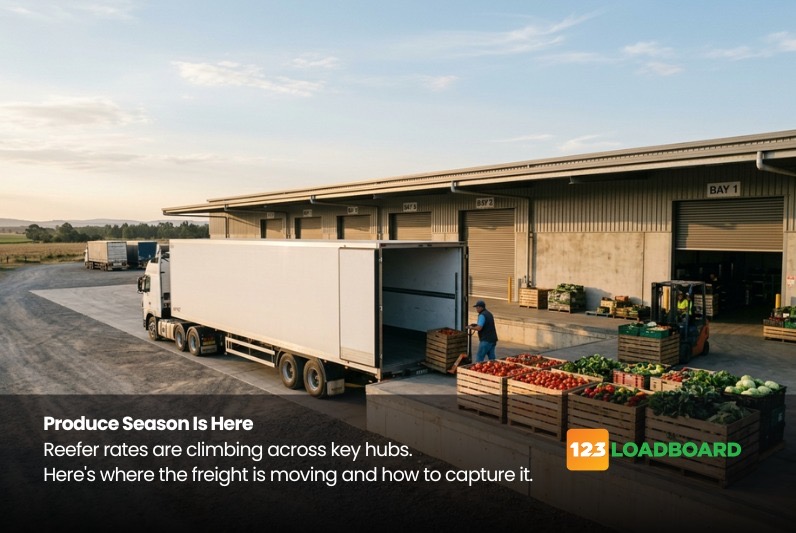
Produce Season Is Here. Are You Positioned to Make the Most of It?

Reefer demand is surging across Nogales, South Texas, and California’s Central Valley as produce season hits full swing. Rates are outperforming dry van in several lanes, but the window to capitalize is short. Here’s where the freight is moving and how carriers can position themselves to make the most of it.

Read more

Latest Blog Posts

March 23, 2026 123Loadboard

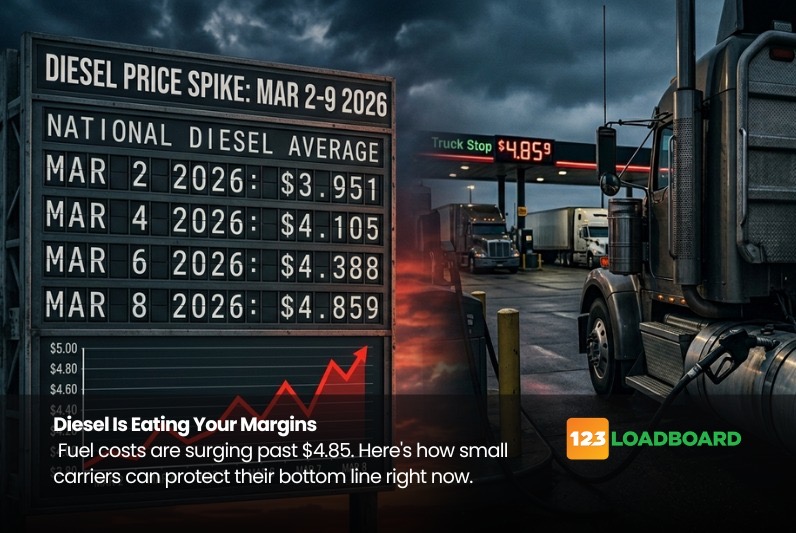
Navigating the Diesel Price Surge: Strategies for Small Fleets to Protect Margins

Diesel jumped to $4.859 per gallon the week of March 9 and analysts are warning it could climb another 35 to 75 cents if Strait of Hormuz disruptions continue. For small fleets and owner-operators already running on thin margins, here’s what you can do right now to protect your bottom line.
March 19, 2026 123Loadboard

Tightening Capacity Alert: How Broker Strategies Must Evolve Amid Carrier Exits

Tender rejection rates have climbed to between 13.4 and 14 percent, levels not seen consistently since 2022, and brokers relying on the old playbook are already feeling it. Here’s what the capacity shift means and how to adapt before loads start going uncovered.

February 25, 2026 123Loadboard

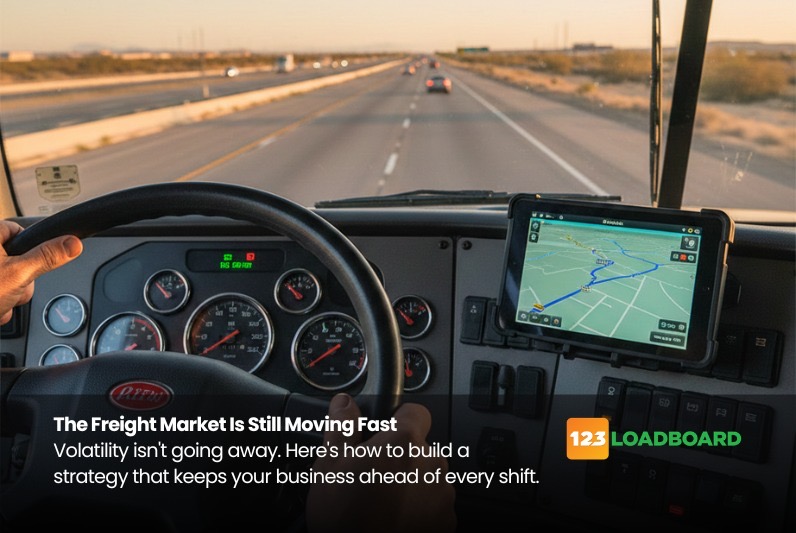
How to Navigate Freight Market Volatility in Early 2026

Spot rates are still bouncing, demand is uneven, and volatility isn’t going away anytime soon. Here’s how carriers, owner-operators, and brokers can stop waiting for the market to settle and start building a strategy that handles the shifts, protects cash flow, and keeps business moving no matter what conditions hit next.

January 21, 2026 123Loadboard

2026 Freight Outlook: Slow Recovery, Smarter Carriers

The freight recovery is coming in 2026, just not the way it used to. This won’t be a fast snap-back driven by surging demand or rate spikes. Instead, 2026 is shaping up to reward discipline, patience, and smarter decision-making. Discover why selective markets filter based on decisions, how to identify profitable lanes early, what makes small fleets better positioned than they think, and how to prepare your operation for a slow but steady recovery.