
2026 Freight Outlook: Slow Recovery, Smarter Carriers
Every freight cycle creates the same question toward the end of a tough year: When does it turn?
For many carriers heading into 2026, the honest answer is uncomfortable but necessary: the recovery is coming, just not the way it used to.
This won’t be a fast snap-back driven by surging demand or sudden rate spikes. Instead, 2026 is shaping up to reward something different: discipline, patience, and smarter decision-making.
For owner-operators and small fleets, that may actually be good news.
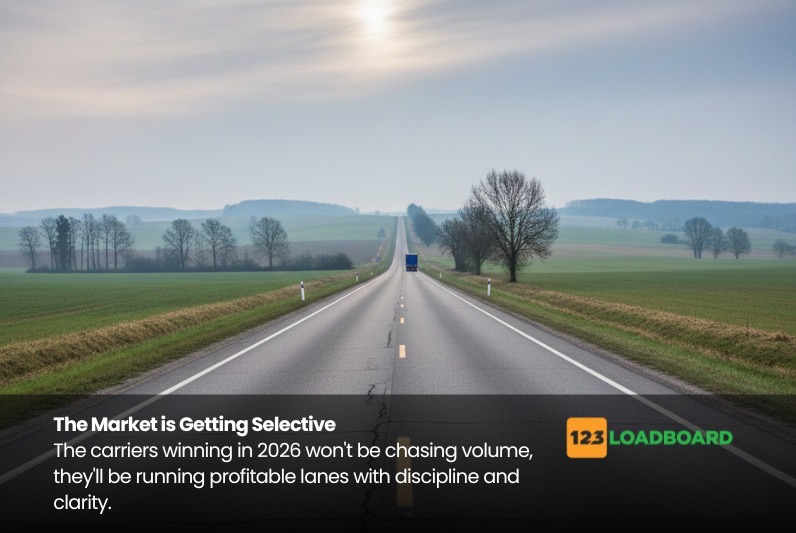

The Big Picture: Recovery, Not Rebound
The freight market doesn’t flip overnight. And most indicators suggest 2026 will be more about stabilization than explosive growth.
What that means in practice: gradual improvement (not a boom), pockets of opportunity (not across-the-board strength), continued volatility (just less extreme), and fewer mistakes tolerated by thin margins.
Rates may firm in certain lanes. Demand may improve in specific regions. But the days of “take almost anything and still win” are likely behind us.
The next phase rewards how you operate, not just how much you haul.
Why 2026 Will Feel Different from Past Recoveries
Previous upcycles were fueled by tight capacity, sudden demand surges, shippers scrambling for coverage, and rates rising faster than costs. This cycle is different.
Costs aren’t resetting. Fuel, insurance, labor, and maintenance haven’t come down enough to give carriers breathing room. Even with modest rate improvements, margins remain sensitive. That means bad decisions get exposed quickly. Efficiency matters more than optimism, and running lean is no longer optional.
Shippers are more cautious. Many are diversifying carriers, avoiding long-term commitments, watching costs closely, and renegotiating contracts more frequently. This creates opportunity, but also instability. Carriers that rely on one big contract or one dominant lane are more exposed.
The market is less forgiving. In past recoveries, inefficiency was masked by volume. In 2026, inefficiency shows up on the balance sheet fast. More loads won’t fix bad lanes. More miles won’t fix poor reloads. More effort won’t fix weak strategy.
What “Smart Carriers” Are Already Doing
The carriers best positioned for 2026 aren’t waiting for perfect conditions. They’re adjusting now. Across the industry, a few behaviors stand out.
They’re running fewer, better lanes.
Instead of chasing everything, they’re focused on repeatable routes, strong reload markets, predictable timing, and lower deadhead exposure. Consistency is becoming more valuable than peak rates.
They’re selective, not passive.
Smarter carriers are saying no more often, walking away from weak backhauls, and letting bad weeks pass instead of forcing volume. They understand that not every week needs to be maximized, but every week needs to make sense.
They know their numbers.
Break-even rates, cost per mile, maintenance cycles, these aren’t estimates anymore. Carriers who know their numbers can make faster decisions, avoid emotional booking, and adjust lanes before losses stack up. Clarity is power in a slow recovery.
The Role of Technology in a Slower Market
In a volatile recovery, speed and visibility matter. But more tools don’t automatically mean better outcomes.
The carriers doing well aren’t drowning in dashboards. They’re using data intentionally: watching lane trends instead of daily spikes, comparing regions instead of individual loads, and spotting shifts early instead of reacting late.
Load boards play a key role here when used correctly. Platforms like 123Loadboard aren’t just places to grab freight. They’re tools for comparing lane behavior, identifying consistency, understanding where demand is strengthening, and making informed choices, not rushed ones.
Technology doesn’t replace judgment. It sharpens it.
How 123Loadboard Helps You Navigate 2026
At 123Loadboard, we understand that 2026 won’t reward carriers who chase volume blindly. It will reward those who make smarter decisions faster.
Identify profitable patterns.
Our Rate Check tool shows you current market rates for any lane, so you can spot which routes are worth your time versus which ones are traps. In a selective market, knowing where to say yes (and no) is critical.
React to shifts faster.
Set up real-time load alerts for your preferred lanes and equipment types. When opportunities appear in your wheelhouse, you’re notified instantly. Speed matters when recovery happens in pockets, not everywhere at once.
Plan strategically, not desperately.
Use our Trip Builder to chain multiple loads together and see your actual profit per trip. In 2026, the carriers who win are the ones who plan routes like a business, not a gamble.
Stay mobile and flexible.
Our mobile app lets you search loads by GPS, respond to opportunities on the go, and adjust your strategy in real time. Small fleets and owner-operators thrive on agility. Make sure you have the tools to move fast.
Calculate true costs.
Our PC*Miler integration calculates accurate mileage, routing, and toll costs before you book. Know your real all-in cost per mile, not just your gross rate. Thin margins don’t forgive guesswork.
Technology doesn’t guarantee success in 2026. But using it intentionally to make smarter decisions? That’s the edge that separates carriers who survive from those who thrive.
Why Small Fleets May Be Better Positioned Than They Think
A slow recovery favors flexibility. Small fleets and owner-operators can pivot lanes quickly, adjust schedules without bureaucracy, pause expansion when conditions weaken, and move aggressively when opportunities appear.
They don’t need the entire market to improve, just their lanes. That agility matters in a recovery that won’t lift everyone equally.
What to Watch in 2026 (Without Overthinking It)
You don’t need perfect forecasts. But you do need awareness.
Key signals worth monitoring: regional demand strength (not national averages), reload consistency by market, contract length and renegotiation trends, spot versus contract balance, and cost pressure by lane.
The carriers who adapt early usually don’t look flashy, but they last.
The Mindset Shift That Matters Most
2026 won’t reward hustle alone. It will reward discipline over desperation, strategy over speed, margin protection over mileage, and clarity over optimism.
This isn’t a bad market. It’s a selective one. And selective markets don’t eliminate carriers randomly. They filter based on decisions.
Final Thought
The freight recovery is coming — just slower, quieter, and more demanding than before.
The carriers who treat 2026 as a test of discipline rather than a return to old habits will be the ones still standing when conditions truly improve.
Smart carriers don’t wait for perfect markets. They adjust early, protect their lanes, and move forward with intention.
Ready to navigate 2026 smarter?
Sign up for 123Loadboard and get the tools that help you make decisions based on data, not desperation. The recovery is coming. Make sure you’re positioned to capitalize on it.
Give us your opinion!